
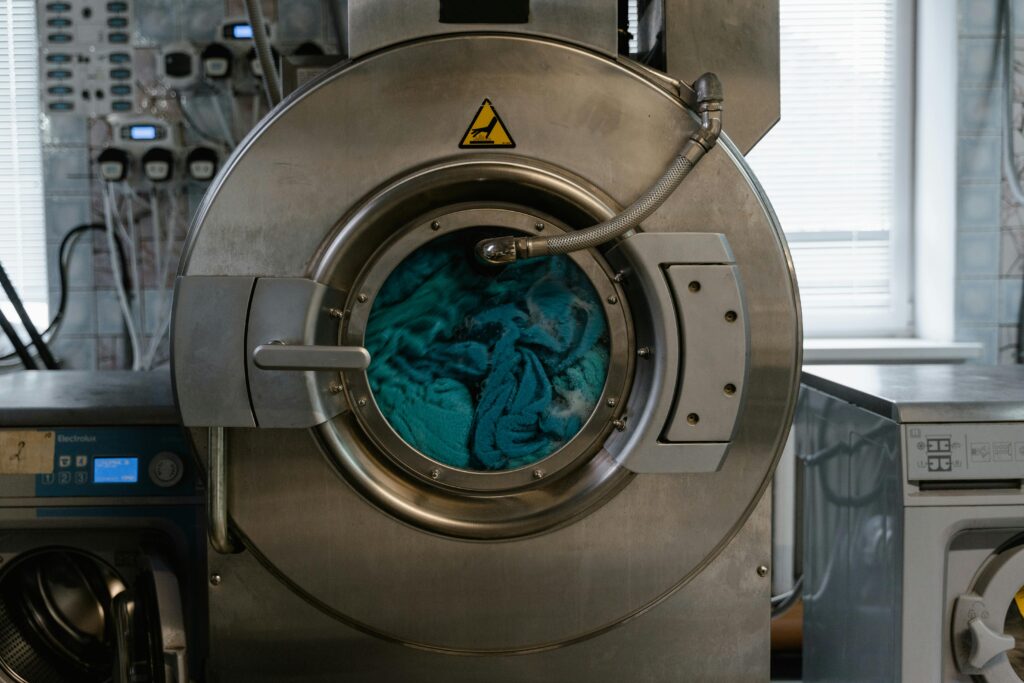
Pakistan’s textile industry is under growing pressure to produce high-quality fabric while reducing water consumption, energy use, chemical load, and wastewater impact.
For dyeing mills, this pressure is no longer only environmental. It is commercial.
Export buyers are asking tougher questions about sustainability, processing impact, chemical management, and resource efficiency. At the same time, local mills are dealing with rising energy costs, water stress, treatment costs, and the need to stay competitive in global textile supply chains.
This is where Asutex’s Greennovative approach becomes highly relevant.
Through Karam Kimya’s textile solutions in Pakistan, local mills can access innovative Asutex and Bozzetto technologies focused on better textile processing, lower environmental impact, and improved production efficiency.
One of the most important developments in this direction is The MO(I)ST Process, a green and innovative dyeing process designed to minimize water use, remove heating from the dyeing process, eliminate electrolytes, and support recyclable wastewater.
Why Pakistan Needs Water Saving Dyeing Processes
Textile dyeing is one of the most resource-intensive stages in textile production. Large volumes of water are commonly used for dyeing, washing, rinsing, and after-treatment. Heating that water also increases energy demand, especially in wet processing units.
For Pakistani textile mills, this creates four major challenges:
- High water consumption
- High steam and energy demand
- Salt and electrolyte load in wastewater
- Increasing buyer pressure for sustainable production
The United Nations Sustainable Development Goals also push industries toward better water management, improved water-use efficiency, cleaner production, and sustainable industrial processes. UN SDG 6 focuses on sustainable water management and water-use efficiency, while UN SDG 9 includes upgrading industries to make them sustainable through improved resource efficiency and cleaner technologies.
For Pakistan’s textile exporters, this makes water saving dyeing more than a technical upgrade. It becomes a way to protect margins, improve compliance, reduce utility load, and strengthen buyer confidence.
What Is The MO(I)ST Process?
The MO(I)ST Process is positioned as an innovative water saving dyeing process from Asutex designed to reduce the environmental impact of textile dyeing.
Based on the technical figures provided for the process, MO(I)ST is focused on:
- 60% to 70% less water consumption
- 80% to 85% energy savings
- No heating requirement
- Zero electrolyte use
- Recyclable wastewater
This makes MO(I)ST highly relevant for Pakistani mills that want to reduce water and energy pressure in dyeing while building a stronger sustainability story for export customers.
Unlike conventional dyeing approaches that may require high water volumes, heating, and electrolyte support, the MO(I)ST Process is positioned around a lower-impact operating model.
For mills, the value is not only environmental. It is also operational.
A process that reduces water, avoids heating, removes electrolytes, and supports wastewater recycling can help mills improve cost control, reduce treatment pressure, and create a more buyer-ready sustainability profile.
How MO(I)ST Builds on Earlier Asutex Sustainability Efforts
Asutex’s public sustainability platform, Greennovative, states that the company supports reducing energy and water by developing products that encourage more sustainable textile production. Asutex also highlights the importance of preserving water through safer chemicals, certified products, responsible sourcing, optimized chemical use, and shorter production processes.
MO(I)ST fits into that wider direction.
Before MO(I)ST, earlier Asutex process-improvement efforts such as Ecofinish HL and ASUCEL WFC helped build the sustainability path toward lower-impact textile processing. These should be positioned as part of Asutex’s broader innovation journey, while MO(I)ST represents a stronger step forward because of its focus on minimizing water, removing heating, eliminating electrolytes, and enabling recyclable wastewater.
For Pakistani mills, this matters because the market is not only looking for another textile chemical. It is looking for process innovation that can reduce resource consumption at factory level.
Why Zero Electrolyte Dyeing Matters
Electrolytes are widely associated with dyeing processes, especially where salts are used to support dye uptake. However, electrolyte-heavy dyeing can increase wastewater treatment challenges because it adds salinity load to effluent streams.
A process positioned around zero electrolyte use can therefore be highly valuable for mills that want to reduce wastewater complexity.
For Pakistani textile processors, this can support:
- Lower salt load in wastewater
- Easier discussion with sustainability-focused buyers
- Better alignment with wastewater reuse goals
- Reduced pressure on effluent treatment systems
- A cleaner sustainability story for export programs
This connects directly with UN SDG 6, especially the target to improve water quality, reduce pollution, and increase recycling and safe reuse globally.
Why No Heating Matters for Energy Savings
Heating water is one of the major contributors to energy demand in textile wet processing. If a dyeing process can work without heating, the potential energy benefit is significant.
The MO(I)ST Process is positioned with 80% to 85% energy savings, which is highly relevant for Pakistan because energy cost and availability directly affect textile production economics.
For mills, lower energy demand can support:
- Reduced steam requirement
- Lower utility cost
- Less dependence on high-temperature processing
- Better production economics
- Reduced carbon footprint per batch
- Stronger sustainability reporting
This also aligns with UN SDG 13, which focuses on climate action, and UN SDG 9, which promotes sustainable industrialization and cleaner industrial processes.
Why Recyclable Wastewater Is a Major Advantage
Wastewater is one of the biggest challenges in textile dyeing. When wastewater contains heavy chemical load, high salt, and complex residues, recycling becomes more difficult.
The MO(I)ST Process is positioned around recyclable wastewater, which can be a major advantage for mills that are moving toward water reuse and closed-loop thinking.
For textile manufacturers in Pakistan, recyclable wastewater can support:
- Lower freshwater demand
- Reduced effluent burden
- Better water reuse potential
- Improved sustainability reporting
- Stronger compliance positioning
- Better alignment with buyer expectations
This is especially important for mills supplying international brands that are increasingly focused on water stewardship, chemical management, and transparent supply chain sustainability.
Why This Process Is Important for Pakistani Textile Mills
For Pakistani mills, MO(I)ST is not just a sustainability concept. It can be positioned as a business solution.
The process directly addresses the pain points that matter to textile decision-makers:
- Water saving
- Energy saving
- No electrolyte use
- Lower wastewater complexity
- Cleaner production story
- Export buyer alignment
- Potential cost reduction
- Stronger sustainability positioning
This makes it relevant for:
- Cotton dyeing mills
- Fabric dyeing units
- Garment dyeing units
- Export-focused textile manufacturers
- Wet processing units
- Sustainability teams
- Processing managers
- Textile groups working with global buyers
MO(I)ST and the UN Sustainability Goals for 2030
The MO(I)ST Process can be positioned as part of the textile industry’s contribution toward the United Nations Sustainable Development Goals.
The strongest SDG links are:
| UN Goal | How MO(I)ST Connects |
|---|---|
| SDG 6: Clean Water and Sanitation | Supports water efficiency, wastewater reduction, and water reuse thinking |
| SDG 9: Industry, Innovation and Infrastructure | Supports cleaner industrial processes and sustainable manufacturing innovation |
| SDG 12: Responsible Consumption and Production | Supports efficient use of resources and better chemical/waste management |
| SDG 13: Climate Action | Supports lower energy demand and reduced climate impact through process efficiency |
This gives Pakistani textile mills a stronger sustainability narrative when communicating with buyers, auditors, and global sourcing teams.
What Mills Should Validate Before Adoption
Before adopting MO(I)ST at commercial scale, mills should run structured trials with Karam Kimya and Asutex technical support.
The mill should validate:
- Fabric type and application area
- Shade target
- Lab-to-bulk reproducibility
- Water saving under actual mill conditions
- Energy saving under actual mill conditions
- Wastewater recyclability
- Final shade quality
- Buyer fastness requirements
- Production repeatability
- Cost per kilogram
- Compatibility with existing machinery
- Overall commercial feasibility
This is important because every mill has different machinery, fabric mix, water quality, production planning, and buyer requirements.
Why Work With Karam Kimya for MO(I)ST in Pakistan?
Karam Kimya brings Asutex and Bozzetto textile solutions to Pakistan and supports local mills with product selection, application guidance, trial coordination, and technical implementation.
Karam Kimya’s textile portfolio includes solutions for:
- Garment dyeing
- Pretreatment
- Dyeing auxiliaries
- Textile finishing
- Sizing
- Denim fabric
- Sustainable processing support
Through Karam Kimya’s product portfolio, Pakistani mills can explore Asutex and Bozzetto solutions that help improve process control, reduce water and energy consumption, and support export-ready textile manufacturing.
For mills looking to reduce water use, reduce energy cost, remove electrolyte load, and improve sustainability positioning, MO(I)ST can be a strong process to evaluate.
To discuss trial planning and technical implementation, contact Karam Kimya.